
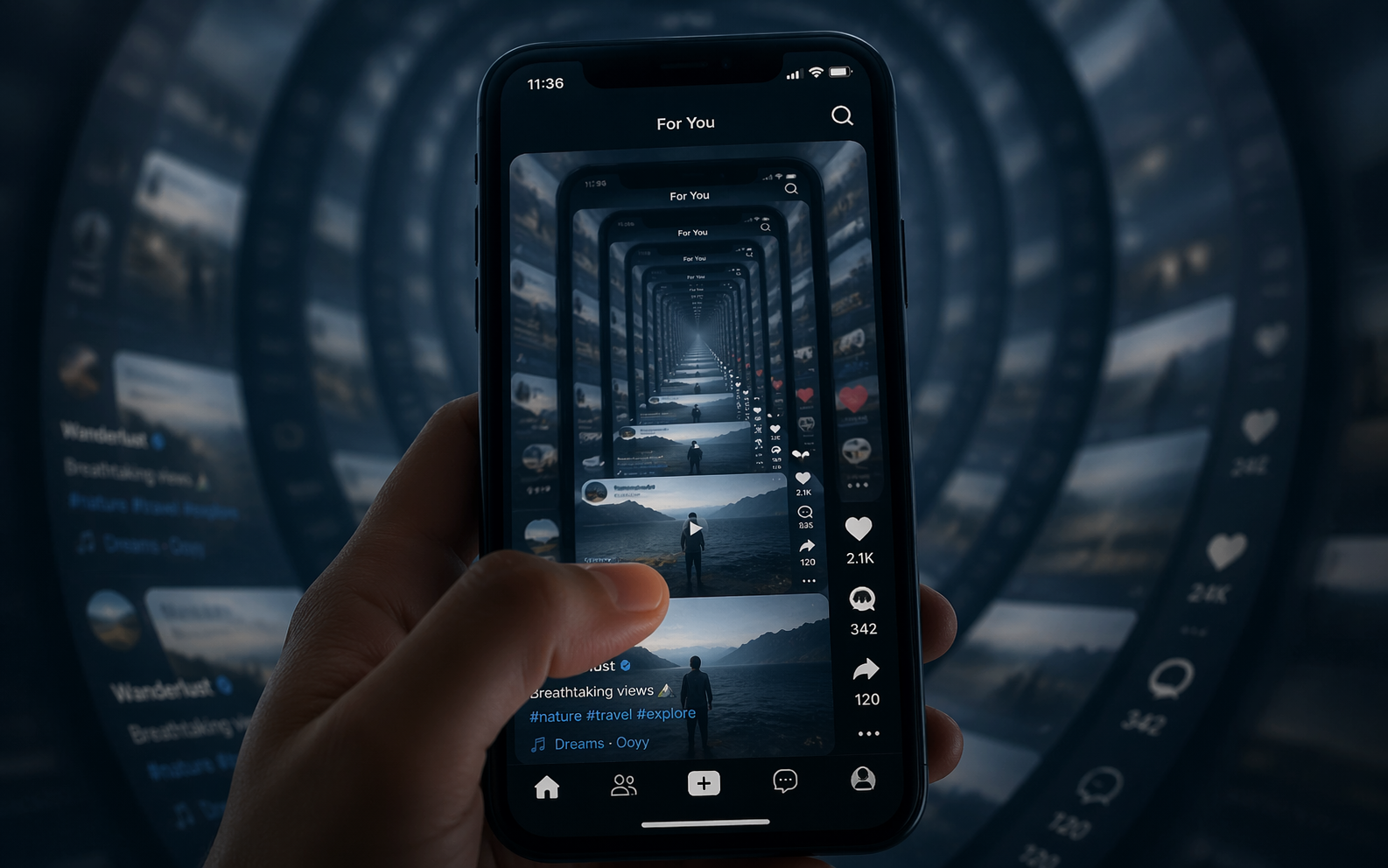
A recent piece from NPR highlights something we’ve been seeing for years in gambling research: the design features that keep people glued to their screens didn’t come out of nowhere.
They were built. And many of them trace back to the gambling industry.
Read NPR article here: https://www.npr.org/2026/04/21/nx-s1-5776665/surprising-origin-features-superglue-kids-adults-to-screens
The “superglue” behind screen time
Researchers have identified four core features that make apps, games, and platforms hard to put down. These same features were refined in video slot machines decades ago.
- Solitude: A one-on-one relationship with the device removes social cues that might signal it’s time to stop.
- Endlessness: There’s no natural stopping point. Content keeps coming.
- Speed: Fast feedback loops pull you into a continuous flow.
- “Almost” rewards: You’re constantly getting close to what you want, but not quite there.
When these features combine, they can create what researchers call a trancelike state, where people lose track of time and remain engaged far longer than intended.
This is not just about kids or screens
It’s easy to read this as a story about kids and social media. But the implications are much broader.
These same design principles are at the core of modern gambling environments. They are also increasingly embedded in everyday digital experiences, from sports betting apps to financial platforms to social media feeds.
This is what we mean when we talk about the gamblification of everyday life.
Gambling is no longer confined to casinos. The logic of gambling is showing up everywhere.
That doesn’t mean people lack willpower. It means they are interacting with environments built to hold their attention.
Understanding that shift matters for how we respond.
What we can do
This isn’t about avoiding technology entirely. It’s about recognizing design and creating counterbalances.
At a systems level, this includes:
- Clearer public awareness about how these features work
- Screening and early identification in healthcare and community settings
- Design standards and accountability for platforms that use these mechanics
At an individual level, it can mean:
- Paying attention to environments that feel “endless”
- Creating intentional stopping points
- Noticing when time or awareness starts to blur
As these design features spread across everyday platforms, understanding how they shape behavior is essential to preventing harm and building more responsive systems of care.
- https://oregoncpg.org/learning-center/READ MORE ABOUT TEENS AND GAMING IN OUR LEARNING CENTER